
By Kymisha Montgomery, CGC Urban Agriculture Coordinator
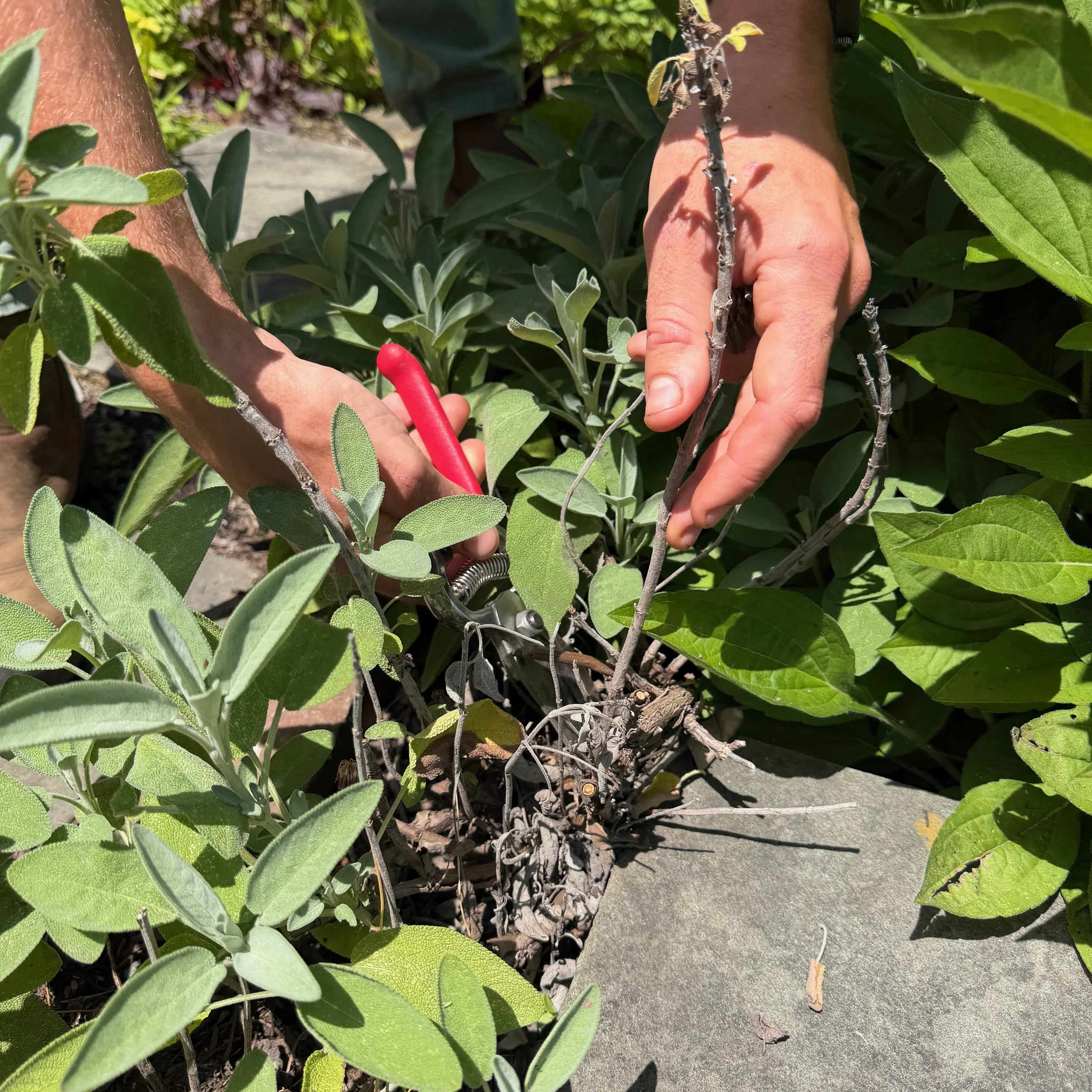
Since many gardeners are apprehensive when it comes to garden tasks such as pruning, I like to follow a few principles to make it less intimating. While it might feel strange to cut off healthy parts of your plants, this simple task is the secret to growing bigger, healthier crops. By encouraging more production and decreasing the risk of diseases, pruning is a great way to get more out of the plant and to maximize its potential.
Clean Tools Matter!
Before carefully manipulating your plant, your tools need some important care. Make sure they’re properly cleaned to reduce the spread of disease, and keep them sharp to allow the plant to heal faster. Finally, pick a dry day to help prevent the spread of germs.
Follow the 3 D’s
You never want to remove more than a third of the plant within a 1-2 week period. Following the 3 D’s—Dead, Damaged, or Diseased—can help you decide what should stay and what needs to go. Always start your pruning sessions by removing any growth that falls into one of these categories. These areas of the plant serve no purpose and are more likely to attract pests or create easy entry points for fungal infections.
Decide Which Crops You’ll Prune
These garden favorites may definitely benefit from pruning the most:
TOMATOES: Prune the lower leaves to expose the main stem and prevent soilborne disease pathogens from gathering on them when water splashes upward during watering or heavy rain. You can also pinch off the “suckers” that grow in the v-shape between two branches to increase air ventilation.
PEPPERS: Pruning off the very top of a pepper plant early in the season can help the plant grow bushier and stronger. Pepper plants can also benefit from removing the lower leaves to help build stronger, thinner plants, which helps with airflow.
HERBS: Regularly pruning the top growth from your herbs can prevent early flowering during dry, high-temperature days, preventing them from bolting and promoting a continuous supply of fresh herbs.
Ultimately, pruning is driven by purpose, not just technique. Always remember the 3-D’s to define your goals and the cuts will follow!