
By Julie Dennewitz, CGC Horticulturist
It started with an email. A random email from a stranger asking for advice on what to plant in the empty garden bed outside of his office. I shot back a response about site prep and seed sources and didn’t think much more about it.
Then, a month later, I was chatting with my friend who relayed excitedly that he was helping some folks from the Community Action Agency in Bond Hill plant a pollinator garden outside their office. I said to him, “Hold on, they asked us to help, too! Should we collaborate?”
It felt meant to be.
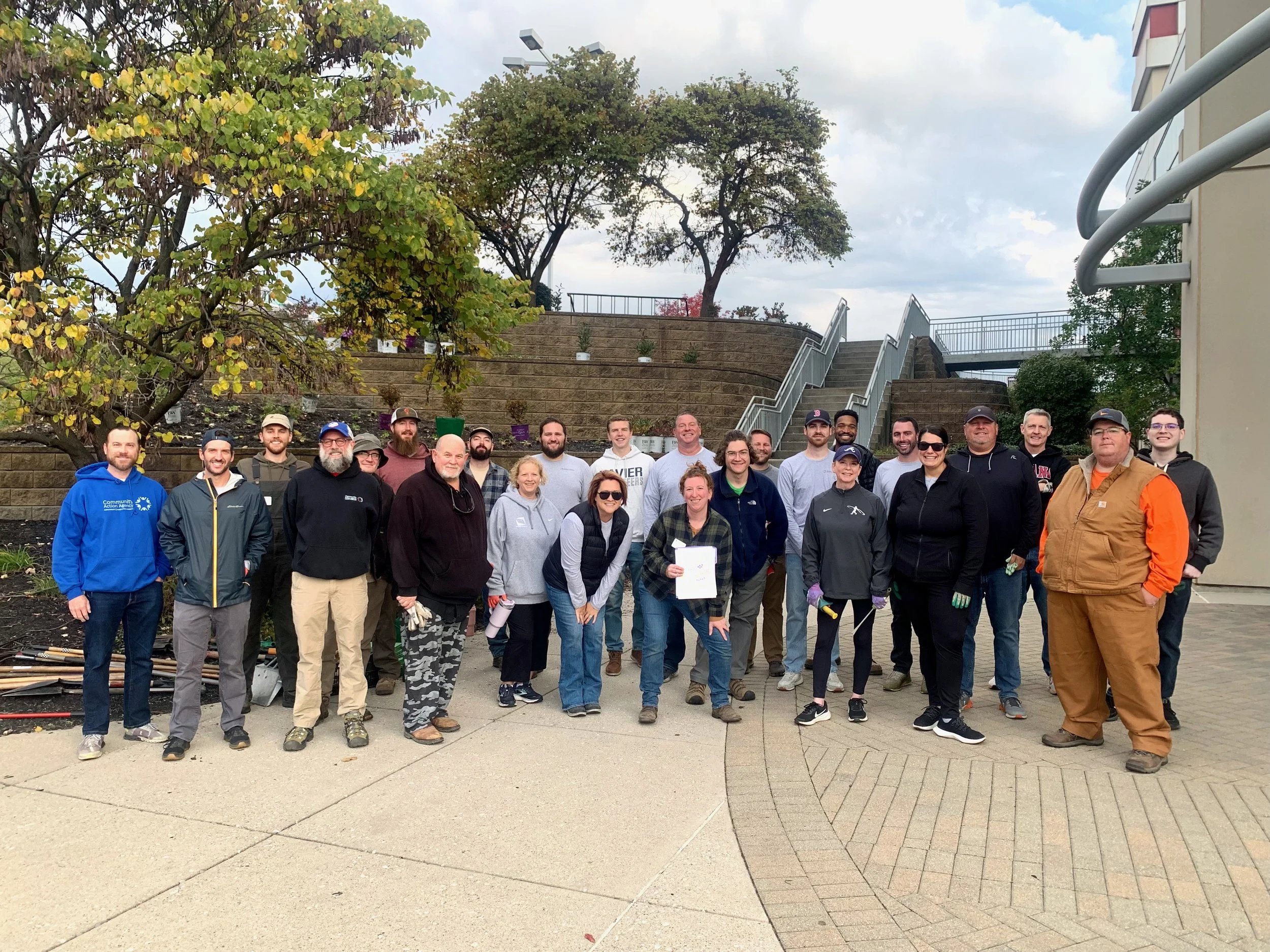
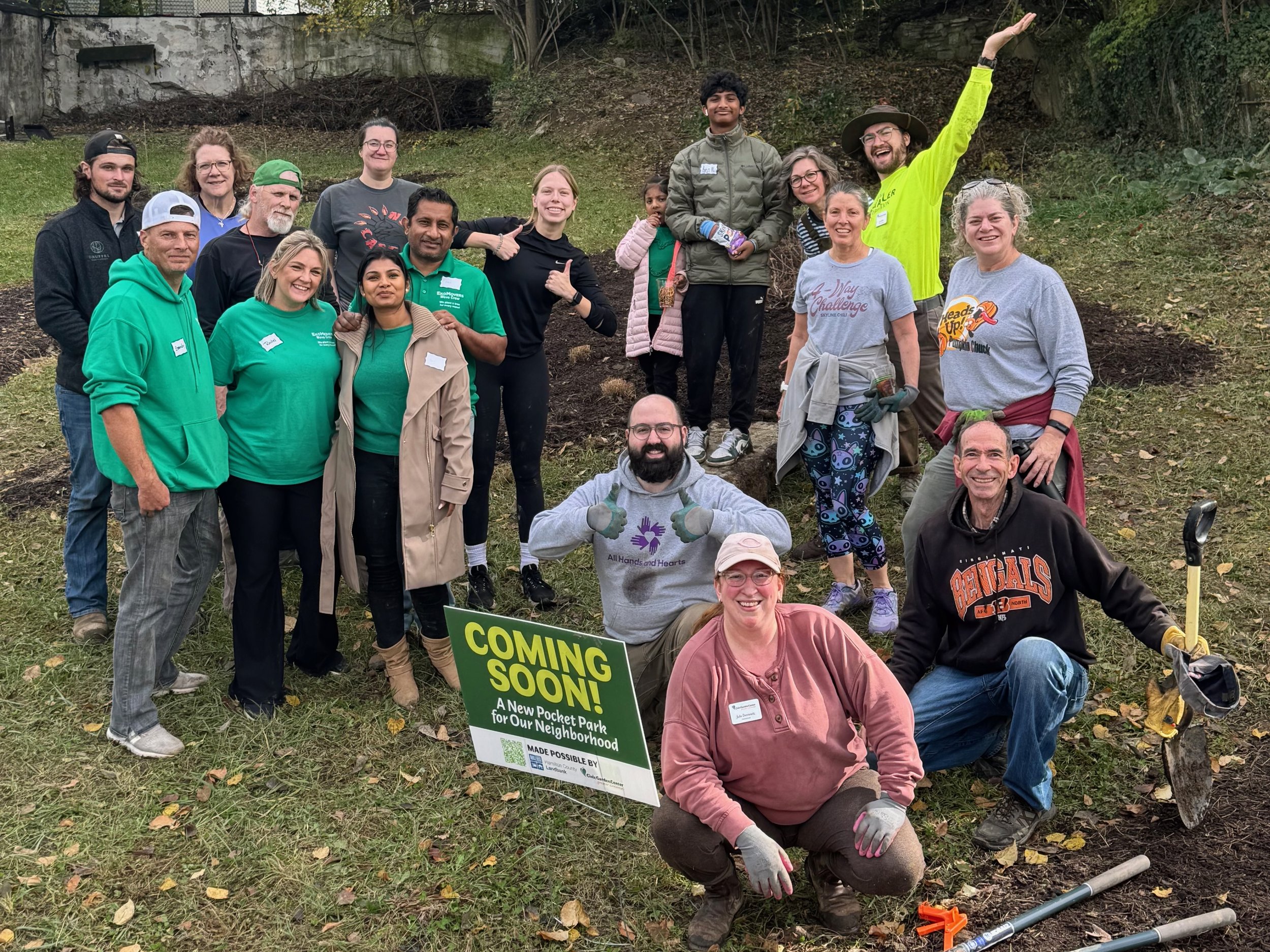
That fall, we broke ground on our first Pollinator Garden Partnership. It felt like a party; an eager mob of volunteers, the folks from the CAA Green Team, a professional landscape crew who had donated their time and skills, multiple CGC staff, and even my friend’s dad, who came by to see what we were up to! I was lightheaded with pride as I watched an empty mulch bed on the edge of a parking lot become a miniature wildlife sanctuary. THIS was the CGC’s mission in action.
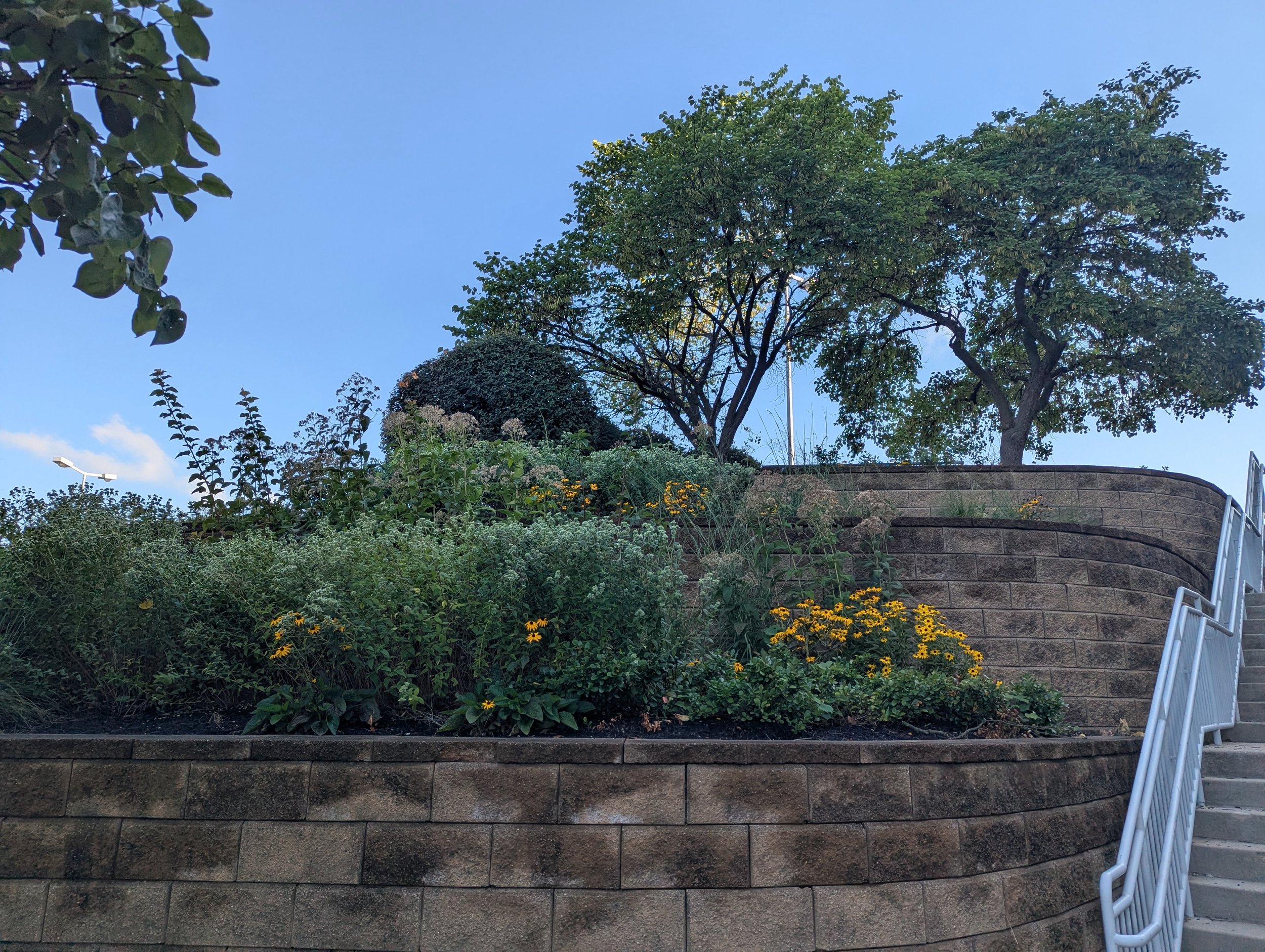
Now in its second summer, the CAA pollinator garden is maturing into an eye-catching feature on the far side of their campus. Black-eyed Susans nod at passersby along the railing of the staircase along with clouds of Mountain Mint, dark mauve Joe Pye Weed, and the swaying turkey-foot seedheads of Big Bluestem. When I visit, I think of all the children who have climbed these stairs, all the visitors who were inspired to pause for a moment and watch the bees at their work.
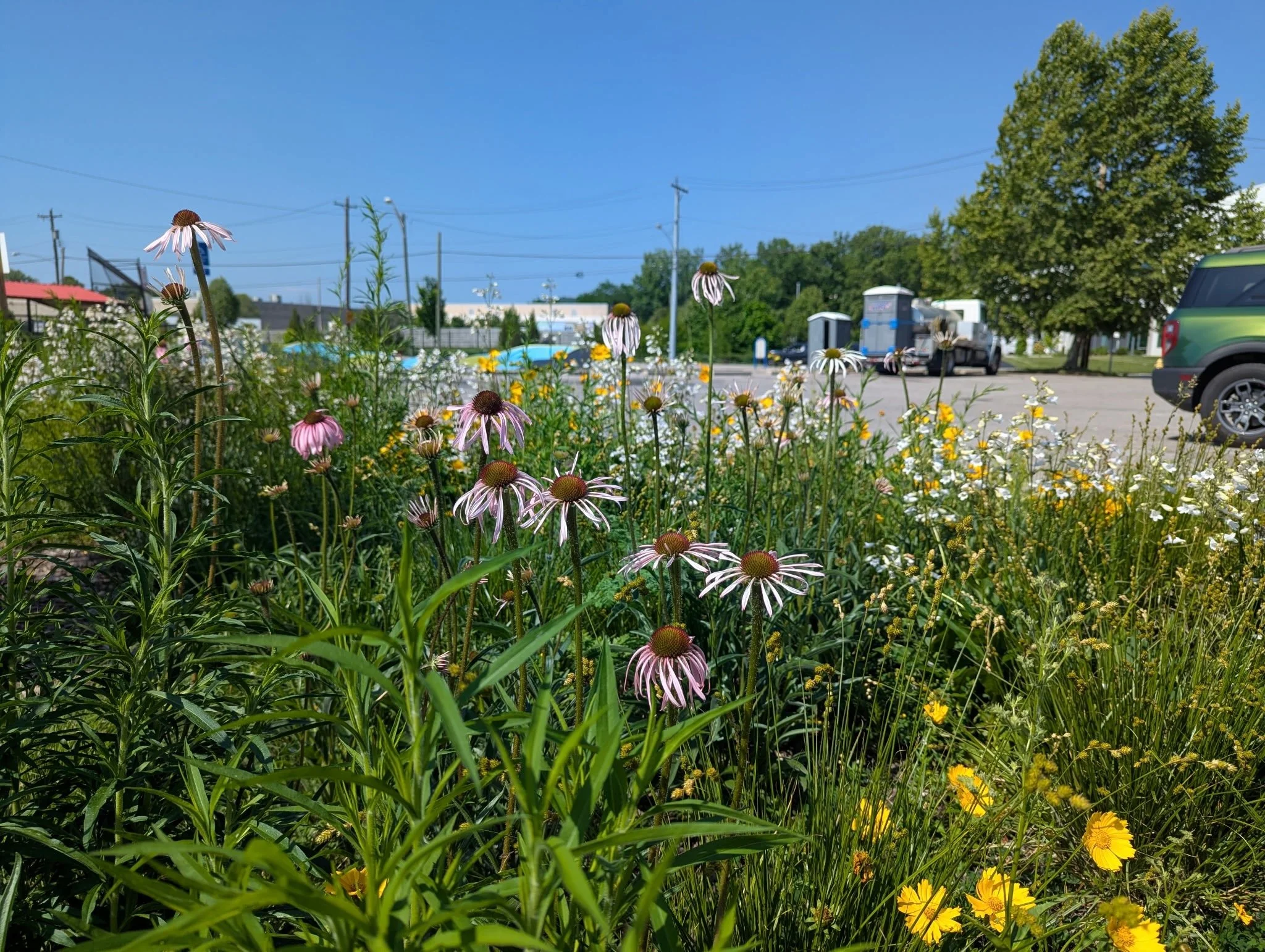
Since that brilliant October day in 2024, the CGC has created six more Pollinator Partnership gardens. These spaces have become scattered pockets of biodiversity in some of Cincinnati’s most underserved neighborhoods: a wildflower meadow in Lower Price Hill, a rain garden in Mount Airy, a monarch refuge along an industrial chain-link fence in the East End. I’ll be driving through the city with my family and cry, “Oh! I’ve got a garden over here, let’s check on it!”
These gardens have been an opportunity to experiment with different species and planting styles. We take time to study each site, choosing native plants that are well adapted to existing conditions so that soil preparation is minimal. We’ve tried a few techniques to clear existing vegetation—smothering, spraying, sheet mulching. Most notably, in Mount Airy, we rented a sod scraper. Some gardens were planted in a single morning, while others have taken multiple workdays. Ongoing maintenance has been simple so far. Good site preparation and dense planting have minimized weed pressure.
It generally takes three summers for a native perennial garden to reach maturity. But I’ve been impressed with how attractive some of these spaces already look in their first or second years. Whenever we can, we use CGC-grown plugs (like the ones you can pick up at the Fall Native Plant Festival on September 12 or preorder as a garden kit), which have deep roots and Ohio DNA. I’m not squeamish about using cultivars when the situation calls for it, but I have found that the wild type plants are much more vigorous and dependable growers. I expect the gardens to keep changing from year to year, to see some plants spread while others recede. These Pollinator Partnership gardens were never meant to be meticulously controlled; they’re intended to create something beautiful where there was previously nothing.
Now I see potential pollinator gardens on every corner, behind every bus stop, and in every gravelly vacant lot. Why not? Why should nature be something you have to “go to”? Why shouldn’t it just be part of our daily lives? Flowers and trees and wildlife have been the background to human existence for thousands of years. There should be no class or race or geographic barrier to this experience. It’s part of us—it is us—and we need it the way we need air and water.
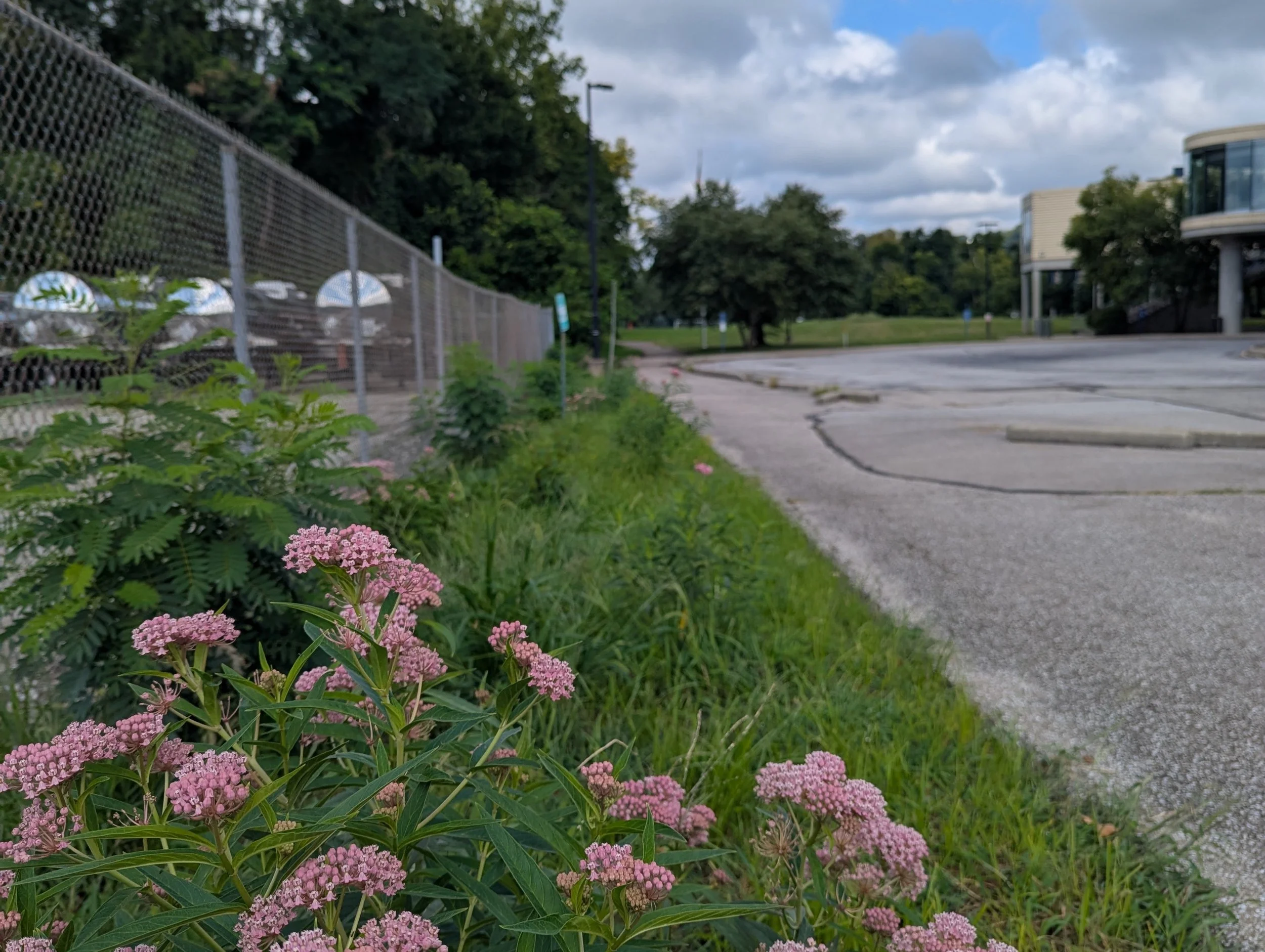
In recent years, we’ve added hundreds of native plants to the grounds surrounding the CGC. But that’s not enough. To fulfill our mission of building community through gardening, education, and environmental stewardship, we have to bring gardens to the places that need them the most.
I won’t be satisfied until I see native plants blooming in every neighborhood in Cincinnati. Seven down, forty-five to go…