
By Kymisha Montgomery, CGC Urban Agriculture Coordinator
Let’s be honest: Every summer, we subject ourselves to the high-maintenance drama of the beefsteak tomato. We pamper it, we prune it, and we pray a rogue summer drought doesn’t occur for too long. But what if your garden had residents that actually wanted to live in Ohio? Enter native plants: the ultimate low-maintenance heroes of the Midwest.

While exotic ornamental flowers are busy complaining about the soil pH, Ohio native powerhouses like Purple Coneflower, Wild Bergamot, and Milkweed are thriving. These plants have spent thousands of years adapting to our erratic weather, meaning they can handle everything from a sudden July drought to a humid afternoon that feels like soup. They don’t need expensive fertilizers, and they rarely need watering once established. They are the "set it and forget it" champions of the garden world. More importantly, throwing native plants into your garden is like opening an all-you-can-eat buffet for local wildlife.
If you want your zucchini and squash to actually produce food, you need pollinators! Native plants act as neon billboards for Ohio’s native bees, butterflies, and predatory insects- the good guys who eat the aphids that may be destroying your crops as you’re reading this.
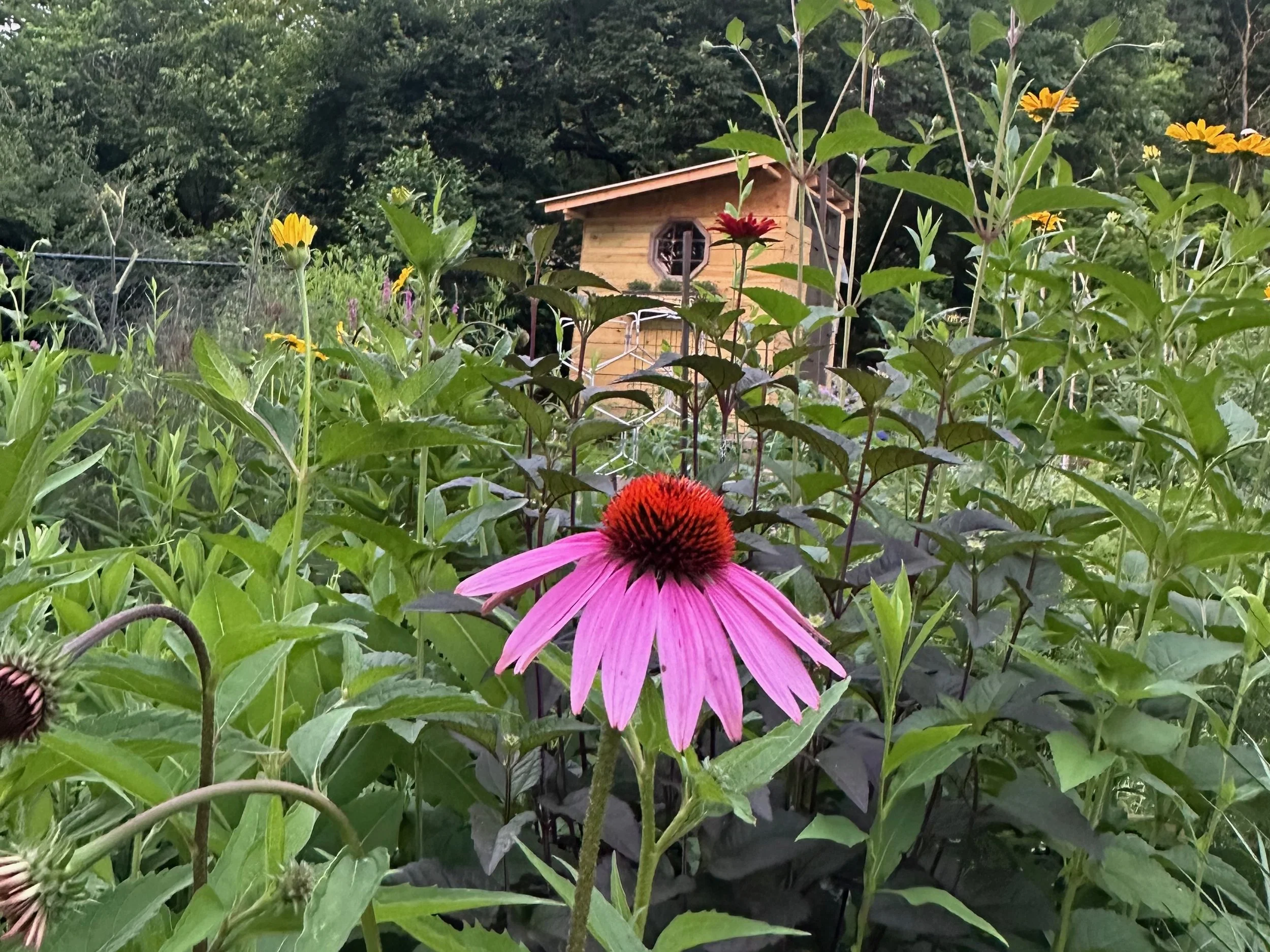
Our McMicken Community Garden recently celebrated their 30th year anniversary and has definitely seen a surge in the growth of crops. They contribute this to incorporating more native plants in the garden. They started intentionally incorporating natives as a contribution to the greater good and to enhance it with the interest in supporting native birds as well as migrating and beneficial insects- especially pollinators. Although they already had a prolific garden, they noticed that with more native plants, they had much better fertilization. And by adding almost zero-maintenance native plants to their garden, they now have extra time to figure out what on earth they’re going to do with 20 pounds of extra cucumbers. That’s not such a bad problem to have!