
By Ellie Falk, CGC Youth Education Coordinator
When we think of school gardens, we often imagine students tucking seeds into the earth or harvesting fresh snacks. But planting food crops isn’t the only way to use these educational spaces.
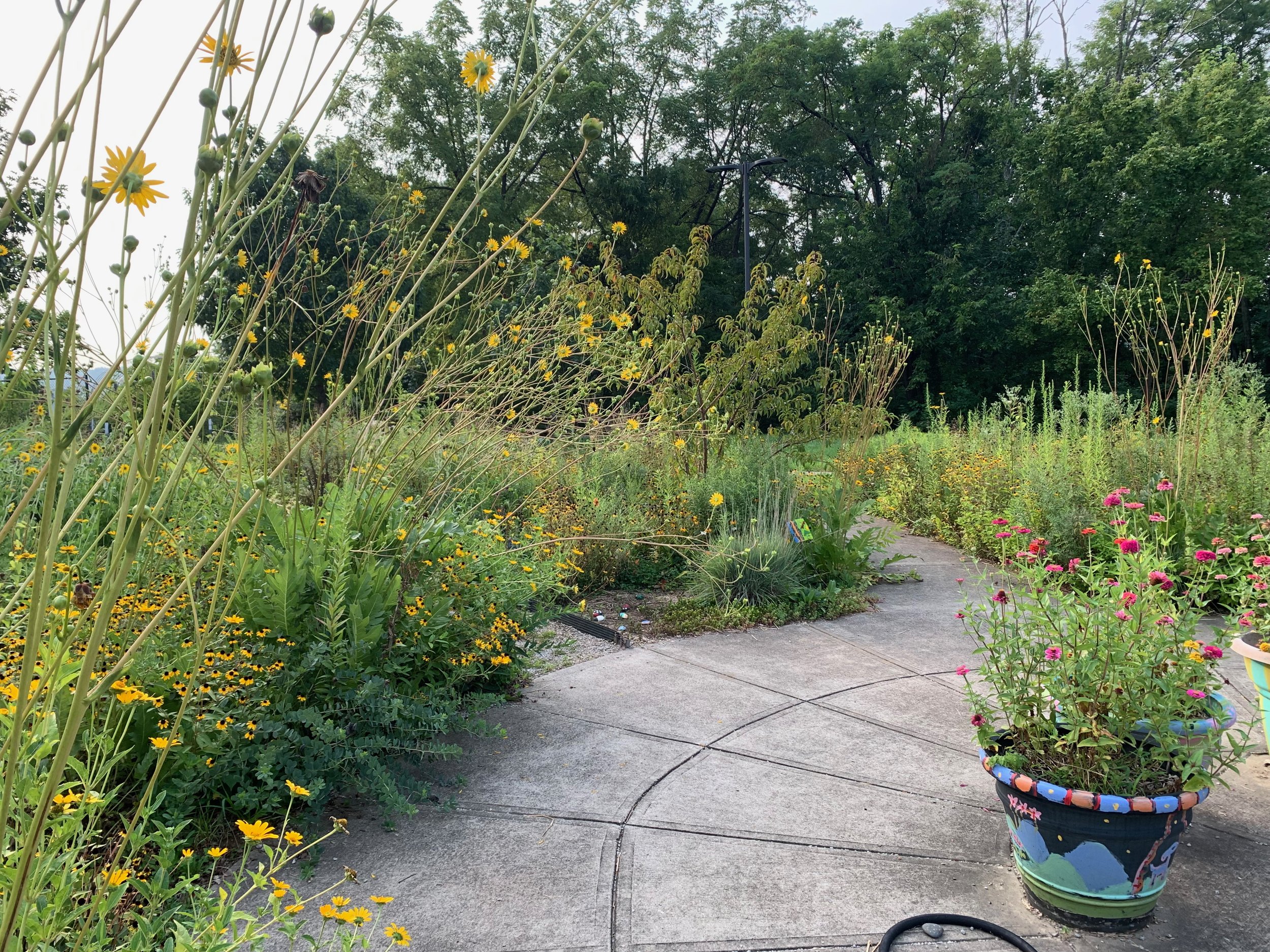
When the Parker Woods Montessori school garden was first installed, it had one native plant: Purple Coneflower (Echinacea purpurea). Now, over ten years later, the garden is bursting with dozens of different species. It’s thanks to the vision and hard work of Judy Ganance, a teacher at the school and the garden’s champion, and the help of many volunteers that the garden is simultaneously a beautiful display of native plants, an edible garden, and a learning space for the 600-plus students at the school.
The initial school garden installation was done by professional landscapers, but as the school community began to use and grow in the garden space, Judy saw the need for more perennials to add beauty without increasing maintenance. The full-sun garden had clay-heavy construction fill, so Judy also needed to find plants that could tolerate those conditions. She was directed to a native plant nursery, Keystone Flora, to find what she needed and began filling in empty space with tough native prairie plants like Prairie Dock, Compass plant, False Sunflower, New England Aster, and more Purple Coneflower. Her interest sparked, she began to learn more about native plants and their relationships with lepidoptera and the biodiversity in the garden grew even more.

This garden is one of many in the CGC’s School Garden Network and one our Youth Education staff visits frequently to lead seasonal garden lessons. The native plants in the Parker Woods garden increase learning opportunities for students. Students study the garden as a habitat for wildlife, regularly finding pollinators sipping nectar, goldfinches eating seeds, hawks soaring overhead, and squirrels leaping from the limbs of nearby trees. During spring, it’s not too uncommon to spot an Eastern box turtle in the garden, and Judy’s students believe it is the same turtle returning year after year. Judy has added host plants such as Milkweed, False Indigo, and Royal Catchfly for some of her favorite lepidoptera, and students and adults alike get excited when they spot the caterpillars munching away on the leaves. While some seedheads are left on the plants for the birds to eat, students also learn about seed saving by collecting seedheads from plants that spread easily throughout the garden. Their efforts help keep those plants a little more in check but also give the students a chance to take seeds home or pass them along for someone else to plant.
Over the years of tending this garden and working with students, Judy has learned a few things that might help a home gardener or school adding natives to their garden:
Keeping natives and annual vegetables separate makes the care of each category easier to manage.
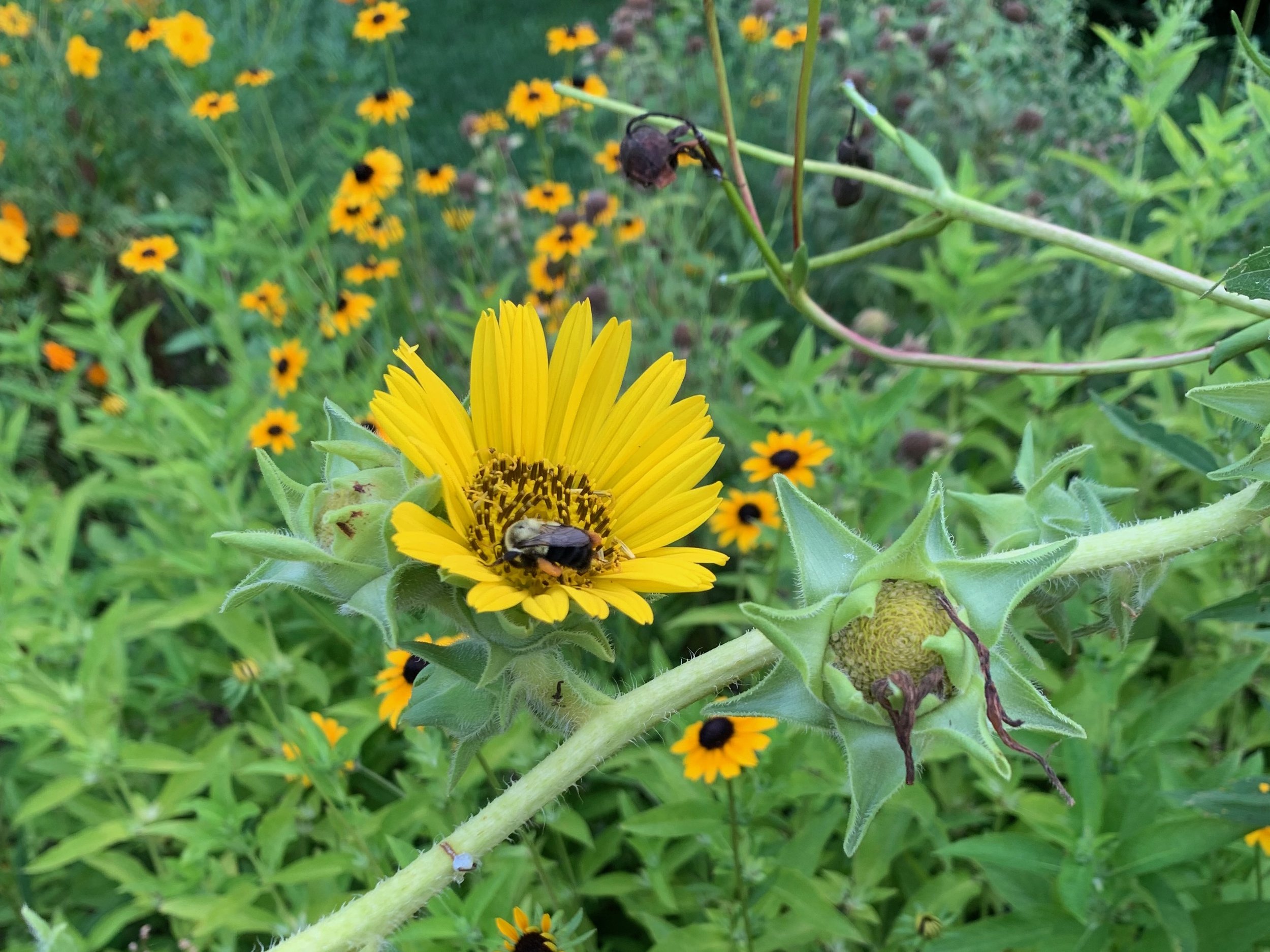
Consider students’ comfort level with bees and, if needed, avoid planting natives that are major bee attractors too close to areas where students will be doing a lot of their activities. It’s also good to teach students about bees, their importance as pollinators, and strategies for coping with a discomfort with or fear of bees that is very real for some. (The same goes for children who will be interacting with a home garden.)
Don’t do any major garden clean-up of natives until early spring. Leave seedheads for birds and dead stems and fallen leaves as habitat for overwintering insects.
Ask for help! Having volunteers (or family members) help maintain the garden is how everything gets done. It also builds community support for the garden and boosts everyone’s enthusiasm and energy for the space.
It may be as important for children to learn about their local ecology as it is for them to explore the process of growing food, and school (or home) gardens are wonderful ways to facilitate both!