
The Soil Web
By Kymisha Montgomery, CGC Urban Agriculture Coordinator
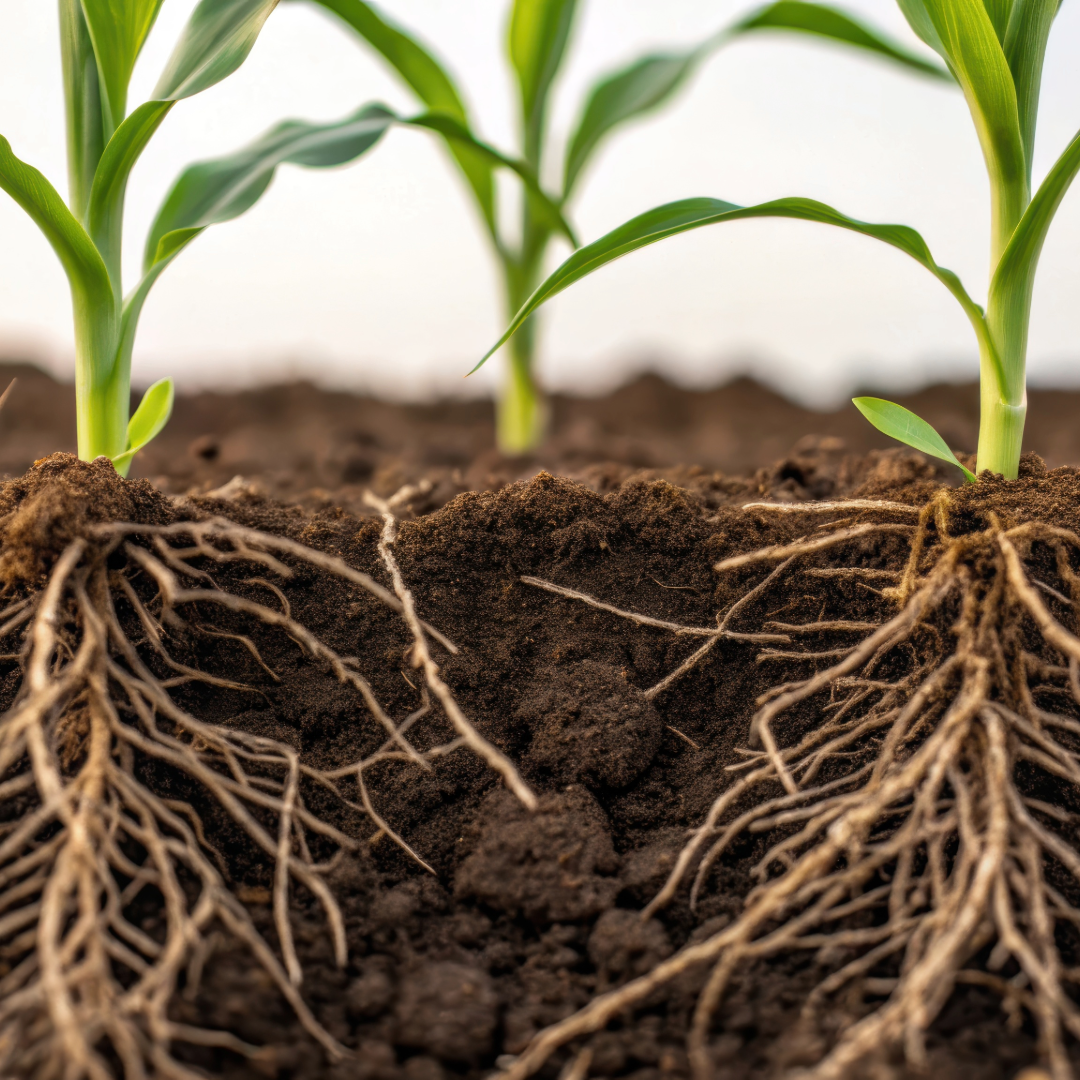
Why practice regenerative gardening? There are many benefits to not disturbing the soil, but sometimes the explanation is buried deep in scientific jargon that can lead to confusion, which makes us weary of participating and receiving its benefits. Change can be intimidating, so I’ll do my best to explain in a way to at least keep you wanting to learn more!
Have you ever heard of the soil web? To understand it a bit better, let’s first consider the food chain. The food chain we all know starts with energy. Everything needs it to survive. The chain is usually explained through the relationships between the vast animal kingdom, with humans at the top. But thinking of this chain as a web and considering how all kingdoms play a major role can make it easier to understand.
Each member of the food chain needs energy to survive. Luckily, there are many options to obtain it. Humans receive energy from plants and animals, and other animals exhibit similar behaviors. The same goes for what’s happening under the soil. The community of organisms in the soil are linked together to form the soil web. This network of organisms receives energy from various sources like roots from plants, which secure their energy from the sun. The soil web is made up of living insects like worms as well as much smaller microscopic organisms such as bacteria and fungi, which are often invisible with the naked eye.
Each participant in the soil web has a different job to do that helps with maintaining both webs—above ground and beneath. As a matter of fact, organisms beneath the soil have a lot to do with how good or poor a plant’s structure is or how productive the plant will be. That’s where the microscopic and larger organisms play a major role. Since plants can’t use locked-away nutrients directly, there is an exchange that happens between them that allows plants to be able to consume the nutrient-rich material by breaking it down.
In short, plants have a difficult time absorbing the nutrients they need without a healthy soil web, leading to unhealthy plants that are more susceptible to pressure from pests and diseases and resulting in fewer nutrients for wildlife and people.
Remember, regenerative gardening is not about what you, the gardener, feed the plants. The goal is to feed the soil web, which in turn feeds the plants!