Embracing Urban Agriculture
By Erin Sigmund, CGC Development & Marketing Associate
I’ll be honest: I’ve never really identified with the term urban agriculture. For one thing, I live in suburbia, where I have too much yard to be considered urban. For another, “agriculture” sounds rather grandiose for the tinkering I do in my backyard. I don’t sell what I produce or do anything at all that could even remotely be considered “commercial.” But the CGC says that even an herb on a windowsill counts.
They’re not the only ones who consider growing food in your backyard to be urban agriculture, either. Here’s a definition from Ohio State’s College of Food, Agriculture, and Environmental Sciences: “Urban agriculture is the production of food and other agricultural products in urban, peri-urban settings”—even if that production happens in a backyard garden as “a form of recreation.”
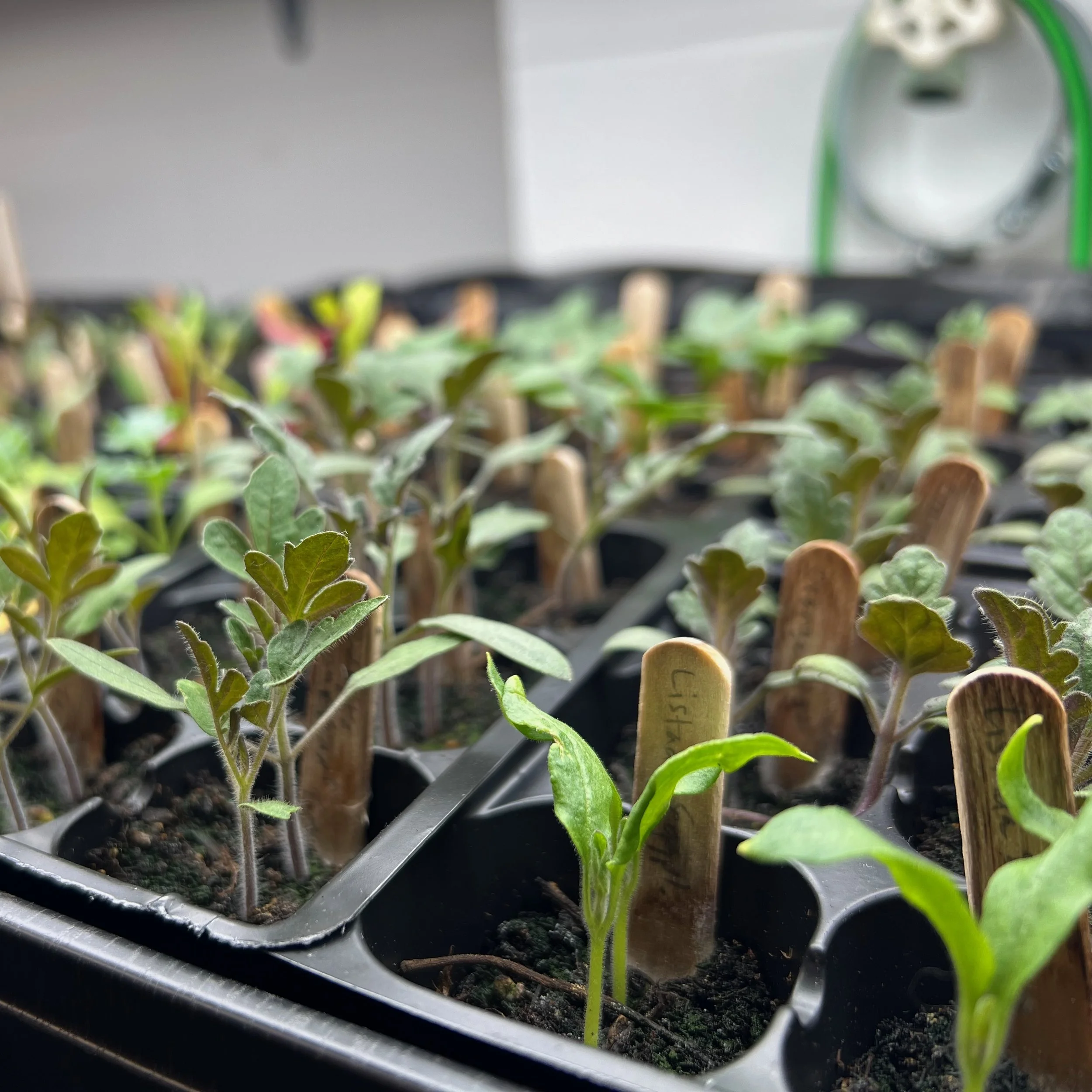
It's largely because of the CGC that I grow food in the first place, and I doubt I’m the only one who would make that claim. After moving into a yard-less condo, my father-in-law —a lifelong gardener — used my yard to grow a little food during the pandemic. It wasn’t until I took the CGC’s seed starting class a few years back, though, that I personally caught the gardening bug. Several conversations with enthusiastic coworkers later, I had a small shelf’s worth of grow lights and plant starts in my basement.
The boundless enthusiasm, so generously shared, is one of the things that makes the CGC really special in my eyes. The people here want you to succeed. They make helping you succeed a personal goal. In community and school and backyard gardens, they’re out there helping anyone who’s interested coax food from the soil.
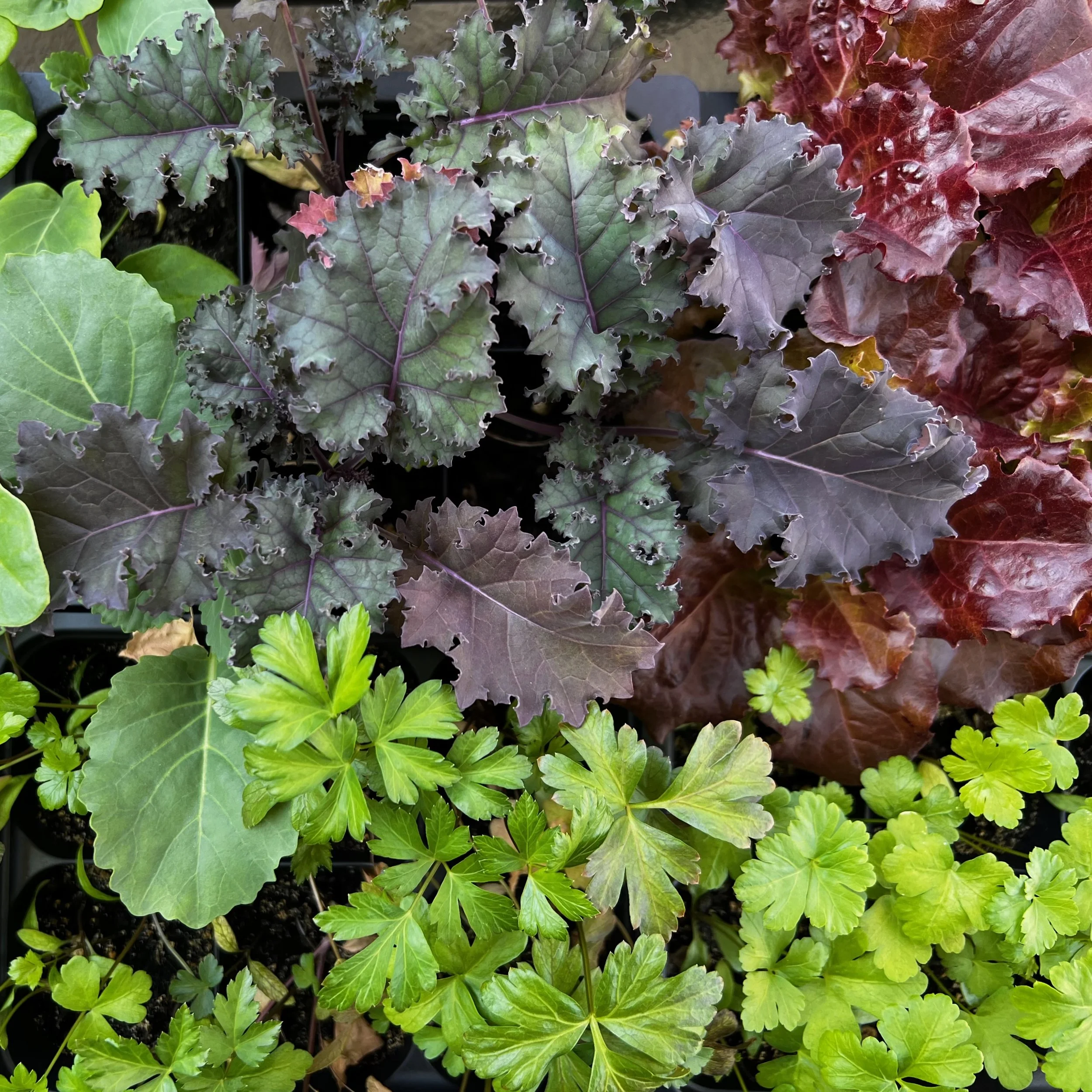
At my little suburban house, nine months of each year now include starting, growing, and harvesting vegetables and a little fruit from the backyard. My husband, whose grandparents spent their retirement running a backyard market garden in Massachusetts, is on board, using his summers off from teaching high school to water and weed. My son enjoys helping with the “plant babies” and eating whatever catches his fancy when he’s out playing.
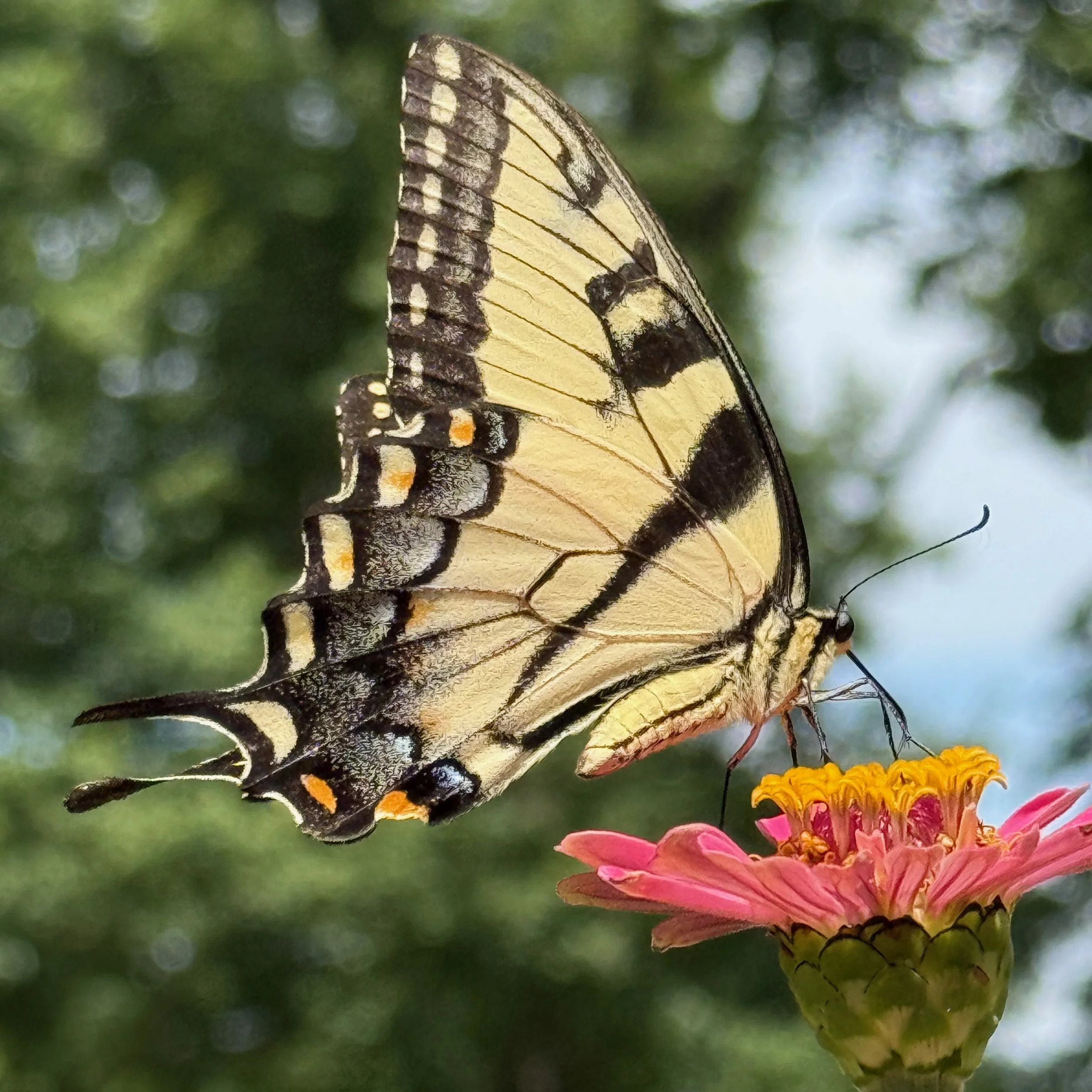
What’s extra cool is that as I’ve explored both sides of the CGC coin—urban agriculture and conservation—I’ve come to understand that a relationship between the two exists, even on a homeowner scale. When I plant native Monarda, the bees appear in droves to pollinate my tomatoes and peppers and cucumbers. When I plant non-native Zinnias to fill in my raised beds, the butterflies visit my yard, where they find the Milkweed and Golden Alexander I’ve planted to host their caterpillars. Every year, we spot a bald-faced hornet nest in one or another of our four big maples and watch its inhabitants patrolling our crops for the pests I’d otherwise have to deal with myself. I know I haven’t exactly recreated a naturally occurring ecosystem, but it’s a big improvement over turf grass and hostas. Instead of existing just for looks, my half-acre plot feeds things, from the soil microbes all the way to the humans.
I think that at its heart, urban agriculture is an act of reclamation. In a world where it can feel like very little is within our power, nurturing a piece of our own food all the way from seed or start to meal is empowering. This kind of close, reciprocal relationship with nature is something our species once relied on—and by embracing urban agriculture in whatever form fits into our lives, we can rekindle that relationship. We also get to live, at least a little bit, in sync with the natural world and to start again each season, carrying forward what worked and changing what didn’t.
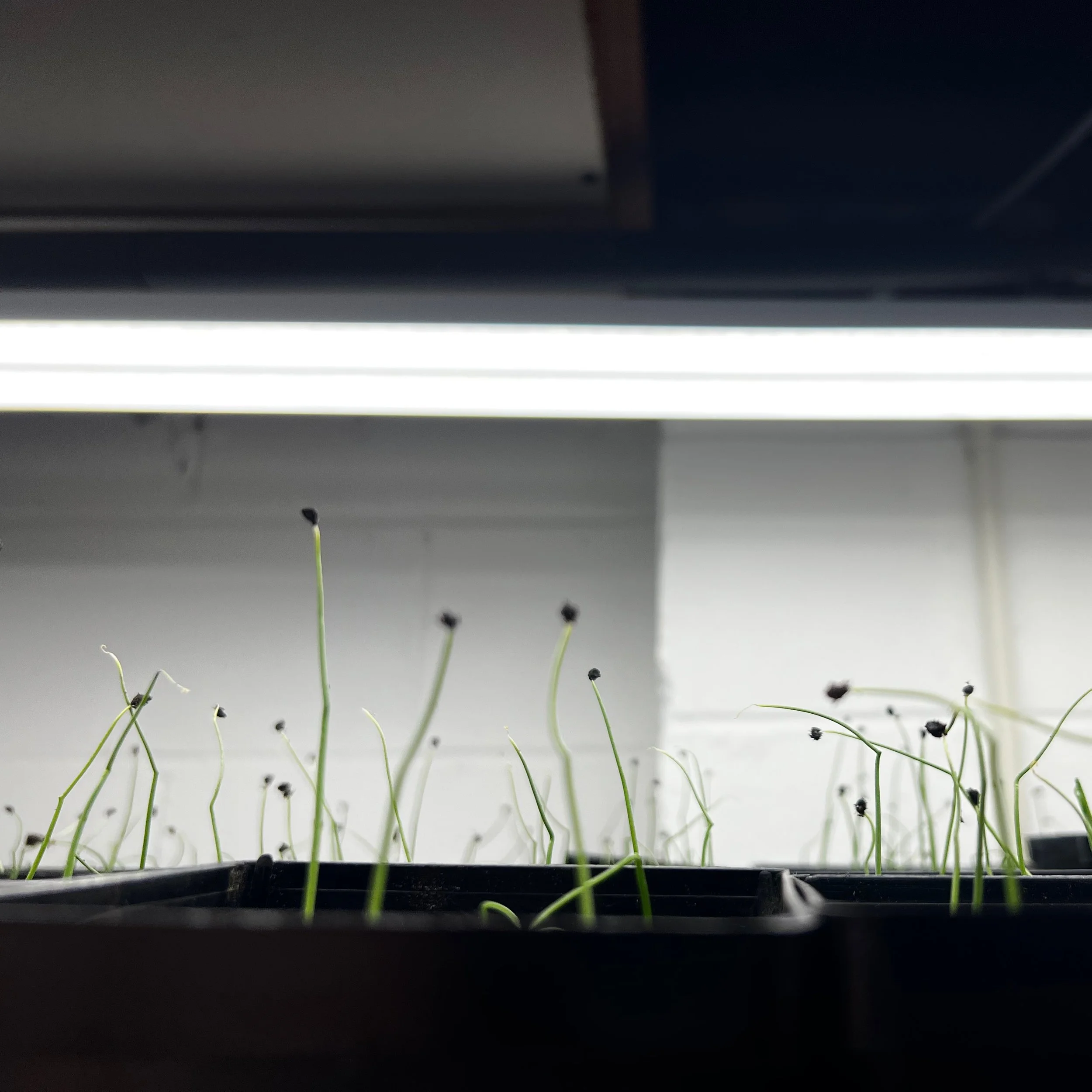
The first crop I start each year is my onions, whose seeds go into their pots in mid-January. I love knowing I have little bits of new life tucked away in my basement. As snow blankets the ground outside and darkness crowds out the daylight, we cheer them on as they unfurl dramatically, bent in half until the top of each shoot finally flings itself free and reaches upward toward the artificial sun of the grow lights. It never gets old.